Use Xylitol Evidence Carefully When Choosing Oral-Health Support for Teeth and Plaque
Direct answer: Xylitol has relevant oral-health research, especially in gums and mints used repeatedly in the mouth. The supplied review reports associations with lower Streptococcus mutans counts and potentially reduced plaque adherence. Those findings make xylitol a useful ingredient to evaluate, but they do not prove that every xylitol-containing supplement delivers the same exposure or produces the same finished-product outcome.
This site may earn a commission from qualifying purchases. Commercial relationships do not change the evidence standard used in the buyer guidance.
Dentolyn Oral-Health Supplement
Review the product profile after the page-specific problem and evidence question are clear.
Dentolyn
Oral-health supplement currently reviewed for formula, evidence, safety, legitimacy and buyer-protection fit across this site.
What should xylitol evidence tell you before choosing an oral-health supplement?
Ingredient relevance
Xylitol is genuinely relevant to oral-health research and deserves attention in formula review.
Delivery form
Evidence from gums or mints may involve repeated oral exposure that differs from a supplement.
Plaque adherence
Reduced adherence is not the same as mechanically removing established plaque.
Bacterial counts
A change in one organism does not establish a complete oral-microbiome correction.
Dose and frequency
If the product amount or exposure pattern is unclear, keep the conclusion at ingredient level.
Finished-product proof
Dentolyn containing xylitol does not automatically prove a Dentolyn-specific clinical outcome.
Use Dentolyn only after the direct oral-health factors are clear
Dentolyn is evaluated as an optional oral-health supplement. Its reviewed formula includes xylitol, but ingredient relevance does not establish the efficacy of the finished product. The page keeps direct oral-care actions, ingredient evidence and Dentolyn-specific claims separate.
Reasonable role
Optional supplemental support for a user who has already addressed the diet, hygiene and plaque-control fundamentals relevant to the goal.
Evidence limit
Do not treat the presence of xylitol or another ingredient as proof that Dentolyn prevents cavities, removes plaque or changes the oral microbiome in a defined way.
Resolve the oral-health question before comparing packages
Use this page to understand the relevant behavior, ingredient evidence and product limits. Move to package selection only after those questions are clear.
Xylitol has a legitimate oral-health evidence base
The supplied oral-microbiome review includes xylitol within personalized oral-care approaches. It reports that regular use of xylitol mints and gums has been associated with decreased counts of Streptococcus mutans and may reduce plaque adherence. This makes xylitol more than a decorative formula ingredient, but the details of how it was studied matter.
The studied form is part of the evidence
Gums and mints create repeated contact with teeth, saliva and oral surfaces. A supplement delivered in a different way may not create the same exposure. When applying ingredient research to a commercial product, the buyer should therefore compare delivery format, contact time, frequency and amount rather than assuming all xylitol use is equivalent.
Lower bacterial counts are not the same as eliminating bacteria
The mouth contains a diverse microbial community, and the goal of oral health is not sterilization. Research involving lower counts of one organism should not be interpreted as proof that xylitol removes all harmful bacteria or “resets” the oral microbiome. The endpoint needs to stay as narrow as the study supports.
Plaque adherence and plaque removal are different endpoints
A reduction in the ability of bacteria to adhere to surfaces can be relevant to plaque formation, but it is not the same as physically removing mature plaque. Brushing and interdental cleaning remain the direct mechanical tools for disrupting biofilm. A xylitol-containing supplement should not be described as a plaque remover unless finished-product evidence supports that claim.
Why Streptococcus mutans matters
The reviewed source discusses S. mutans as an organism strongly associated with tooth decay and cariogenic biofilm. It can metabolize carbohydrates into acids and tolerate acidic conditions. Xylitol is relevant partly because it cannot be used by S. mutans in the same way as ordinary fermentable sugars, altering its normal energy metabolism.
Xylitol does not turn a supplement into a cavity treatment
Ingredient relevance does not automatically establish prevention or treatment of dental caries. Caries is a multifactorial process involving biofilm, acid production, diet, tooth surfaces, saliva and time. A supplement claim should remain narrower than the broader disease process unless the finished product has been appropriately studied.
Frequency of exposure can matter
Regular use is a recurring feature in the xylitol literature cited by the review. That is important because a product taken infrequently or swallowed quickly may not reproduce the same oral exposure pattern. If the Dentolyn label does not provide enough information to make that comparison, the evidence should not be stretched beyond ingredient-level relevance.
Why dose transparency matters
Knowing that xylitol is present is different from knowing whether the delivered amount resembles amounts used in research. If the label does not disclose enough to make that comparison, a careful buyer should avoid claiming that the ingredient is present at a clinically studied level.
Where Dentolyn fits
The reviewed Dentolyn formula includes xylitol, which gives the formula a scientifically relevant oral-health ingredient. The correct inference is that xylitol is worth considering within the formula. The incorrect inference is that Dentolyn has therefore been proven to reduce plaque, prevent cavities or rebalance the microbiome.
Xylitol is only one part of an oral-health decision
A buyer should still review brushing habits, interdental cleaning, diet, dry mouth, gum symptoms, the full ingredient list, safety considerations and the evidence level for the final product. One promising ingredient should not override weaknesses elsewhere in the decision.
A practical evidence ladder for xylitol
| Evidence level | Reasonable conclusion |
|---|---|
| General xylitol research | Xylitol is relevant to oral-health science. |
| Specific gum or mint research | That delivery format may affect bacterial counts or plaque adherence. |
| Ingredient listed in Dentolyn | Dentolyn contains a relevant ingredient. |
| Finished-product claim | Requires Dentolyn-specific evidence for the stated outcome. |
Practical conclusion
Xylitol can strengthen the scientific relevance of an oral-health formula, but it should not be used as a shortcut to a broader product claim. Keep the delivery format, amount, frequency and measured endpoint visible, and evaluate Dentolyn at the finished-product level only where direct evidence exists.
Reference framework: Rajasekaran JJ et al. “Oral Microbiome: A Review of Its Impact on Oral and Systemic Health.” Microorganisms. 2024;12:1797. DOI 10.3390/microorganisms12091797.
Why the same ingredient can perform differently across products
An ingredient's usefulness can depend on how much is delivered, how long it remains in contact with oral surfaces, how often it is used, and what other ingredients are present. That is why evidence from a chewing gum cannot simply be copied onto a tablet or capsule. The more the marketed format differs from the studied format, the more cautiously the evidence should be transferred. This is especially important when the product label does not provide enough detail to compare exposure with the research.
Choose the next guide based on the problem you still need to solve
Plaque and biofilm guide
Diet and oral microbiome
Healthy oral microbiome guide
Review deeper xylitol evidence
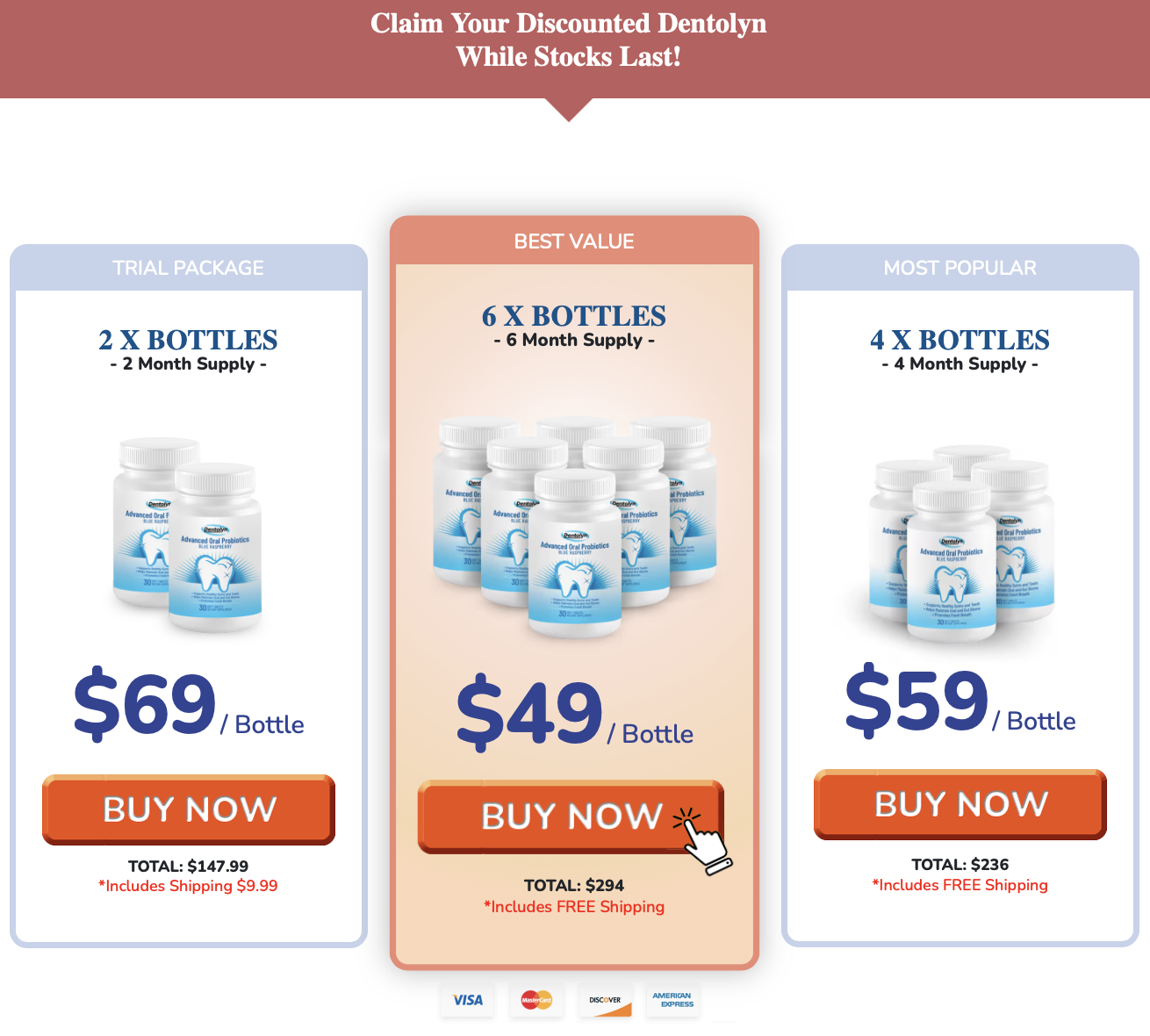
Compare current packages
Ready to compare the current offer?
Only move to package selection after the health and evidence questions are clear.
Frequently Asked Questions
Is xylitol good for oral health?
Xylitol has relevant oral-health research, particularly in gums and mints used regularly.
Can xylitol reduce Streptococcus mutans?
The supplied review reports associations between regular xylitol mints or gums and decreased S. mutans counts.
Does xylitol remove plaque?
Research on plaque adherence is not the same as physical plaque removal, which still depends on brushing and interdental cleaning.
Does xylitol in Dentolyn prove it prevents cavities?
No. Ingredient presence does not establish a finished-product caries-prevention claim.
Does Dentolyn contain xylitol?
Xylitol is included in the currently reviewed Dentolyn formula.
What should I check beyond xylitol?
Review the full formula, label directions, safety, oral-care routine, product evidence and whether the supplement fits the actual oral-health goal.